
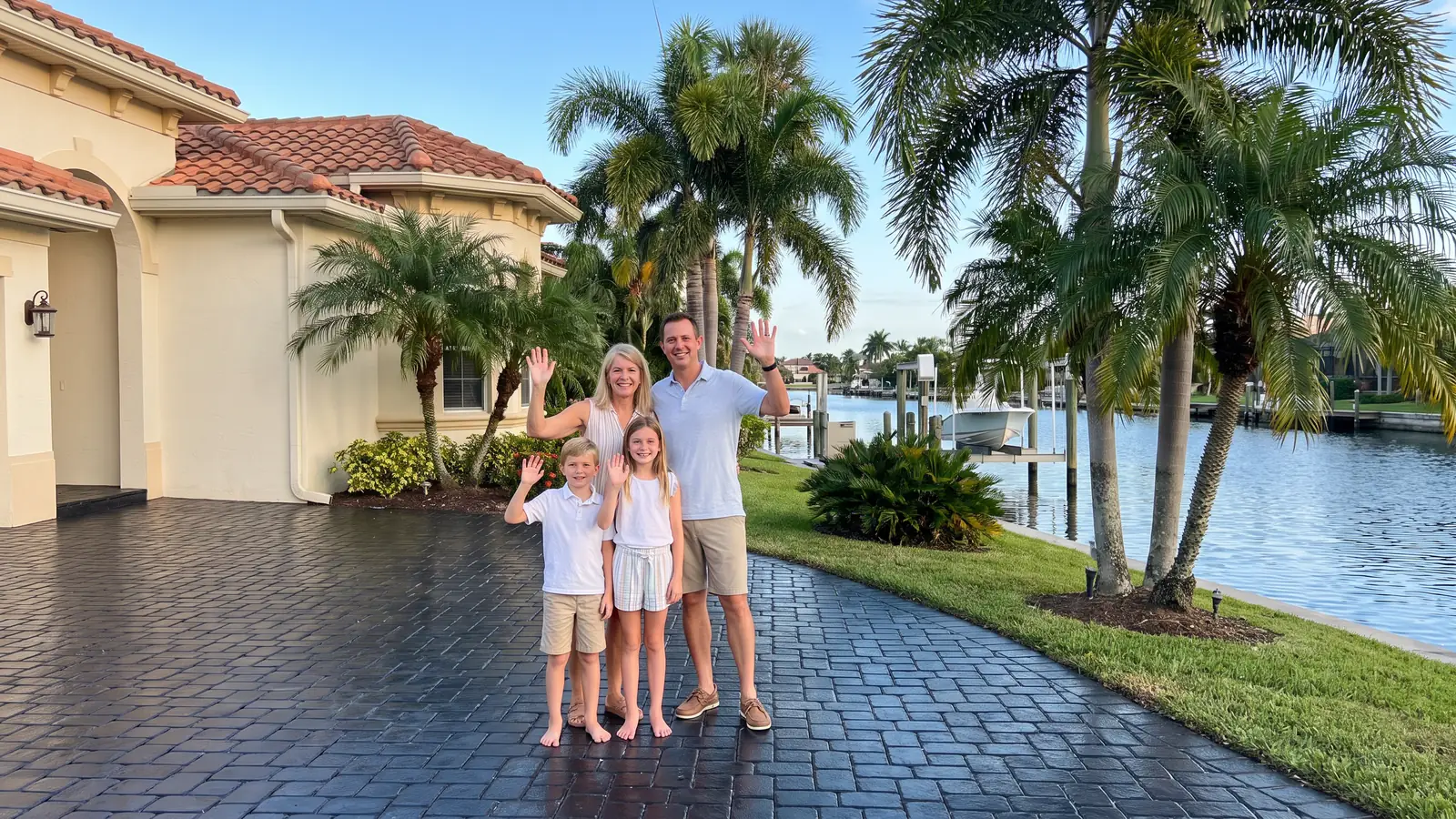
Paver sealing for South Daytona homes
Paver Sealing in South Daytona, FL
South Daytona sits on the Halifax River, and a local contractor can seal your pavers when you phone (386) 666-4204.
- Brings out deeper paver color
- Fresh joint sand helps lock pavers in place
- Gives weeds less room to grow
- Makes the surface easier to keep clean
- Free estimate, no obligation
Request a Free Estimate
Free, no obligation.
Fast, careful paver sealing in South Daytona
Paver sealing in South Daytona begins with a free estimate from a local contractor who cleans, re-sands and seals driveways, walkways and pool decks. Expect an answer inside 1 business day, usually much sooner. To start, ring (386) 666-4204 and name your street.
Picture a driveway gone chalky and gray, with weeds poking up where the sand washed out. Once it has been washed, packed with sand and coated, those pavers look like one color again. Nothing is owed for the visit. Describe yours when you dial (386) 666-4204, and the contractor will lay out the steps.
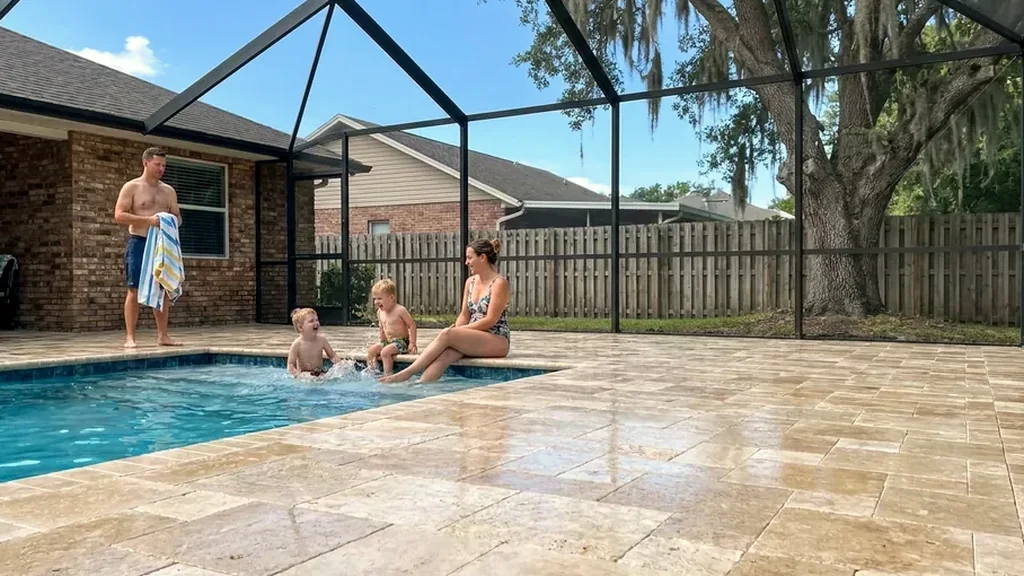
Why hire a local paver sealing contractor in South Daytona?
South Daytona is a small city with many long-time owners, so pavers here often carry a past nobody wrote down. A local contractor knows to ask about it, and you can ask for a free estimate to start that talk.
Free look first
The contractor visits your South Daytona pavers, measures them and names a price at no charge before any work is agreed. Ask as many questions as you like.
A price you can check
Published figures for this region run $1.50 to $3.00 per square foot for the full job. Set any South Daytona quote beside that range.
Pick your finish
Matte hides scuffs on a driveway used every day. A wet look gives richer color, but marks show sooner. You choose before work begins.
You stay in charge
You pick the date and the finish. Asking for a South Daytona estimate does not commit you to hire anyone.
Get Your Free Estimate in South Daytona
Tell us about your pavers in South Daytona.
Free, no obligation
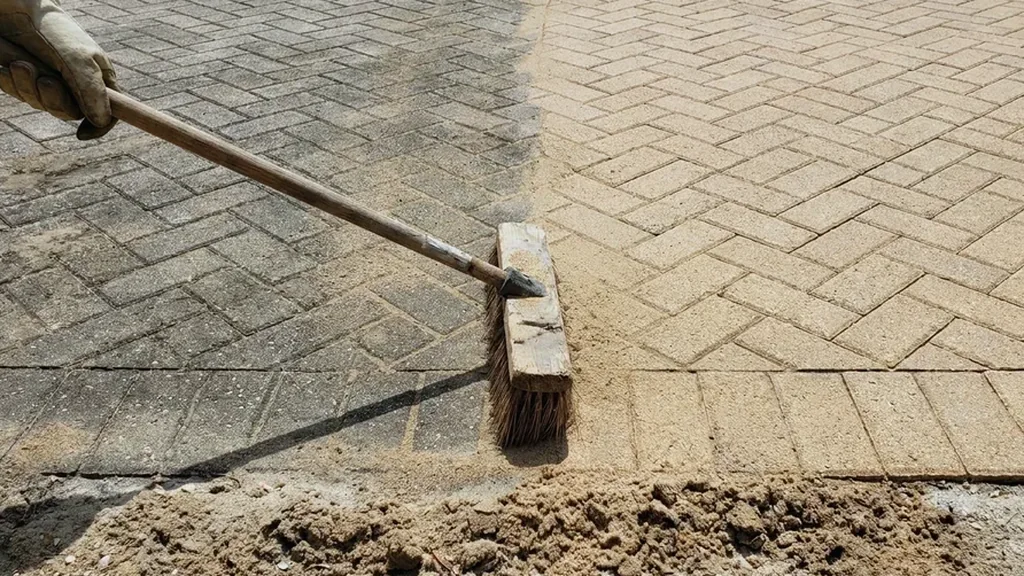
What paver problems show up most in South Daytona?
Water that stays after a storm
The city says it is upgrading its stormwater system to better handle flooding, and the town averages only about 6.5 feet above sea level. A driveway that holds water after rain turns green sooner than one that drains. Sealer needs a dry surface, so a low corner can hold up the whole day. Tell the contractor where water pools on your lot, because trouble usually starts there. Photos taken after a storm help. A contractor who hears about it early can set aside drying time before the coat goes down. Stormwater projects are under way in residential neighborhoods, so conditions on your street may improve over the next few years. The city sits on the Halifax River, and humidity above 70 percent is common in this area.
Green film and gray haze
A Daytona Beach paver company reports humidity above 70 percent year-round and frequent afternoon storms in this area. Damp air and shade feed algae, and the film can turn a red or tan driveway gray. It has to come off before sealer goes down, because sealer would lock it in. The shaded side of the house and the north edge of a patio show it first. Washing first also lets the contractor see the real condition of each joint. With 1.35 of the city's 5.05 square miles under water, damp air is never far away. Heavy storms can also sweep leaves and silt onto pavers, and those hold moisture against the surface.
Joint sand that drains away
Volusia County sits on sand ridges, and the Daytona and Paola soils run in long, narrow bands. Heavy rain pulls sand out of the joints, so they widen and soil moves in. The weeds you pull this spring started as missing sand. Pavers near downspouts and low corners lose sand first. Fresh sand packed in before the coat keeps the pavers from shifting. A driveway that has been left alone for years may need more sand than you expect, and that is normal for sandy ground. The county's Atlantic Coastal Ridge formed when the ocean stood 4 to 6 feet higher, and the sand it left still shapes the ground. The 2020 census counted 6,839 housing units in a city of 5.05 square miles, so many driveways sit close to the street.
Coatings from earlier owners
About one in four South Daytona residents is 65 or older, and the median age is 48.7. Many homes have had the same owners for decades, so no one may recall which sealer went on. Water-based sealer will not bond over solvent-based sealer, and aged solvent coats can turn white in humid air. A small test patch tells the contractor what is down before a new coat is picked. If you know the year the pavers went in, share it, because that narrows the list of likely products. The city counted 5,914 households in 2020, so many driveways here have had more than one owner. About a quarter of residents are 65 or older, so many homeowners ask for a clear schedule and plain answers.
Rust spots from sprinklers
A University of Florida extension note says iron runs high in most Florida well water. If your yard runs sprinklers off a well, the spray can leave orange marks on pavers where it lands. Light-colored pavers show them most. Those stains get treated before sealing, because a coat over rust would hold it in place for years. Aiming the heads elsewhere keeps new marks from forming. Light-colored pavers show rust most, and the streak usually points back to the sprinkler head. Older sealed pavers may show patches where tires sat longest.
Do South Daytona homes near the Halifax River need different paver care?
Often yes, because water covers about a quarter of the city's 5.05 square miles. South Daytona sits on the Halifax River just south of Daytona Beach, so damp air, wet ground and shade shape how pavers age. Pavers near the water stay green longer. Say how near the river you are when you dial (386) 666-4204.
The city counts 6,839 housing units, and 13.5 percent stood empty in 2020. A house vacant for a season can have pavers gone gray before the new owner moves in. A fresh wash and coat is a common first project for a buyer. If that is your driveway, reach a contractor at (386) 666-4204 and say how long it has been since anyone cleaned it.
Reed Canal Park and the blocks around Ridgewood Avenue show how mixed the town is, from older streets to newer ones. Older blocks tend to have older pavers and more unknowns about past sealer. Newer blocks may need little more than a wash, sand and a first coat. City Hall sits at 1672 S Ridgewood Avenue, and you can ask for a free estimate and say roughly when your house was built.
What does paver sealing cost in South Daytona?
Published prices around here run $1.50 to $3.00 per square foot for the full wash, sand and seal. In South Daytona, three things move a quote: the old sealer on the driveway, the amount of green growth and how much sand is missing. A driveway never sealed is simpler than one with a failed coat. For a figure on your pavers, ring (386) 666-4204.
Size counts as well, because a small walkway costs more per square foot than a wide driveway. Pool deck, walkway and driveway square feet are added up, and the rate applies to the sum. Repairs to sunken pavers show up as a separate line. Call (386) 666-4204 to hear which of these fit your lot.
| Paved area | Typical example | Clean, sand and seal |
|---|---|---|
| 300 sq ft | Small patio or walkway | $450 to $900 |
| 600 sq ft | Two car driveway | $900 to $1,800 |
| 1,000 sq ft | Large driveway or pool deck | $1,500 to $3,000 |
| 1,500 sq ft | Driveway plus pool deck | $2,250 to $4,500 |
Math based on the $1.50 to $3.00 per square foot that Northeast Florida paver companies published as of November 2026. Your contractor sets the actual price after seeing the surface. Repairs, leveling and stripping failed sealer are usually extra.
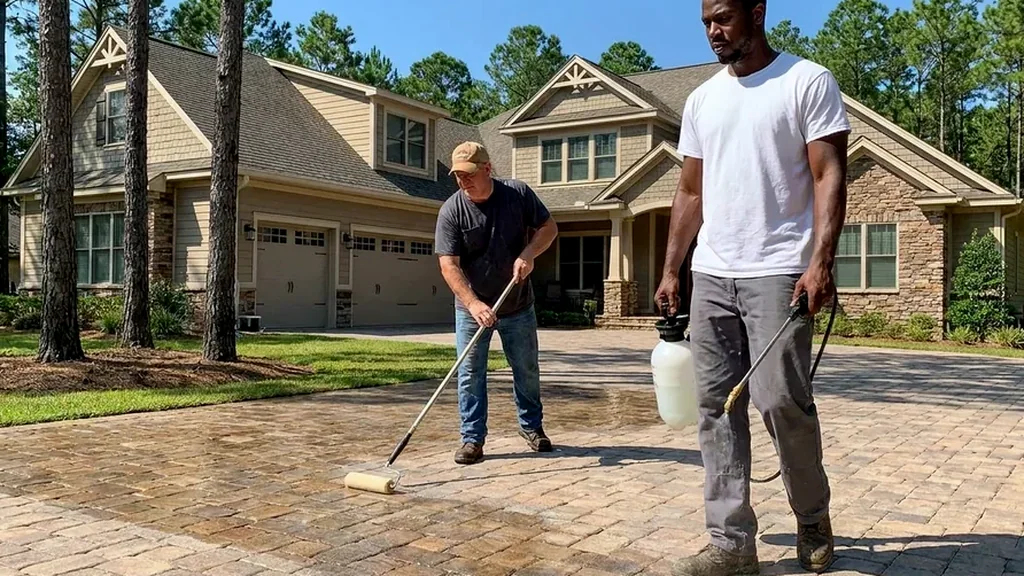
How does a paver sealing job work in South Daytona?
Look at the pavers and the drainage
The contractor checks where water sits on your South Daytona driveway and which areas stay shaded. Sunken or lifted spots get repaired first, since sealing over a dip only keeps it. If something was applied before, the product matters, because water-based sealer cannot go over solvent-based sealer. Mention any past standing water, since it changes the cleaning plan. The contractor also measures each surface, so the quote lists real square feet instead of a guess. The visit also gives you time to ask about the schedule and what to move off the pavers. Standing on the driveway, you can point to the spots that bother you most, and the contractor writes them down. Pets and plants near the driveway get covered or moved before washing.
Wash away the film
Cleaning removes algae, dirt and stains from the surface and the joints. Rust marks from sprinkler spray are dealt with here so they do not end up under the coat. A good wash also shows which joints lost the most sand. Rinse water is kept off plants and painted trim where the pavers meet the house. South Daytona pool decks and lanai floors get the same treatment, with extra rinsing near screens. Pavers on a pool deck get the same careful rinse, with extra time near screens and doors. If a sprinkler head throws water onto the pavers, the contractor will point it out while cleaning that stretch. A pool deck with a screen gets the screen cleaned around, not through.
Seams get new sand
Washing pulls the old sand out, so new sand goes in before any sealer. On the sandy ground of Volusia County, open joints let soil move in and give weeds a start. Joints get filled, and then the surface gets a sweep. Sand that has been low for years makes this stage run longer. Ask what kind of sand goes in, and how it is packed. Tight joints also help rain run across the surface instead of pooling at the edges. Sand is the first thing to leave a joint here, because the Daytona soils are known from long, narrow sand ridges in this county. Joints are worked in short sections so sand does not dry loose.
Wait for a dry surface
Rain comes often from May through October, and sealer needs a dry surface. The contractor watches the forecast and waits instead of coating damp pavers. Low spots that hold water after a storm get extra time to dry. Sealing too soon is how milky patches show up under the coat. A day lost to rain is cheaper than a coat that clouds. Waiting a day costs little next to redoing a cloudy coat. Late afternoon storms are the usual interruption from May through October, so mornings carry the most weight. If a thunderstorm builds, the contractor stops and covers the work.
Apply the finish you chose
Sealer is sprayed on and then back-rolled so it reaches the joints without lap marks. Walking is usually fine within hours, and cars stay off for about a day. Quotes for the span between coats commonly run from two to five years, and a wet look shows scuffs sooner than matte. Sprinklers wait until the contractor says the new coat has cured. A short walk-through at the end lets you see the finish and ask about care. Ask when the pool deck, the steps and the walkway can be used again, since each may cure on its own clock. A short care note at the end lists what to avoid on a new coat.
Complete paver services in South Daytona
A South Daytona job follows a set order: wash, re-sand, dry and seal. The wash takes off algae and old grime, and fresh sand goes back into the joints. Sealer goes on last so nothing dirty is trapped under it. To ask how long each stage runs on your lot, phone (386) 666-4204.
Driveways take tires, oil drips and sprinkler spray, while walkways and patios near trees stay damp and go green first. Pool decks need a finish that is not slick when wet, and a non-slip additive is common there. Each surface wears its own way, so the contractor treats them one at a time. Say which of these you have when you ask for a free estimate.
Sealer is either water-based or solvent-based, and the old coat decides which one can go on. If an earlier owner used solvent, a water-based product cannot follow it. After that comes the look: matte is quieter and hides scuffs, while a wet look deepens the color. Ring (386) 666-4204 to talk through which fits your pavers.
Rain falls most from May through October, so a date can slide a day or two. Humid air slows drying, and shaded patios dry last. Winter and early spring are drier. To pick a date that suits your week, reach a contractor at (386) 666-4204.
Questions to ask before you hire
- Can you add grit if my kids ride bikes and scooters on the driveway?
- If I list the house this spring, should I seal before the photos or after?
- Does the job change if my pavers are laid in a herringbone pattern?
- Will you note the date of each coat, so I know when to book the next one?
- Can you tell me the cure time in writing, so I know when the movers can bring the truck in?
- Does morning dew push back your start time, and how do you tell the pavers are dry?
- How do you work around a mailbox post, a lamp post or a drain set into the pavers?
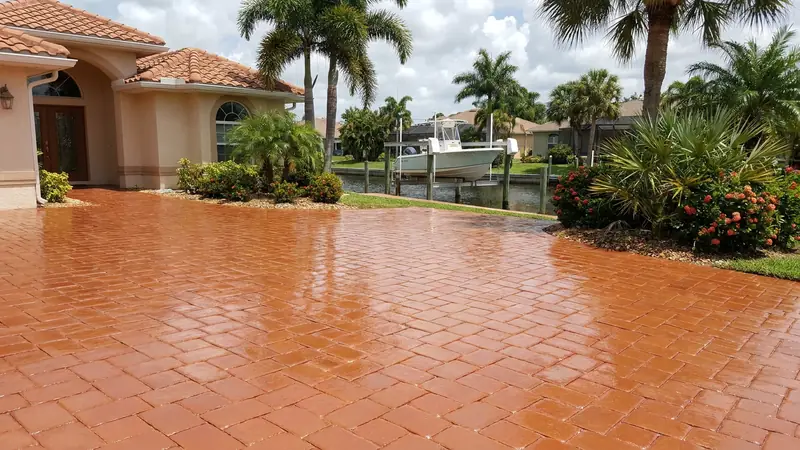
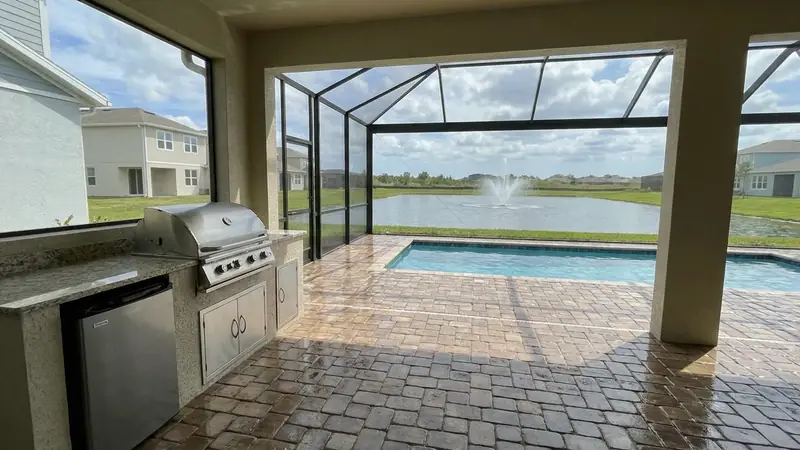
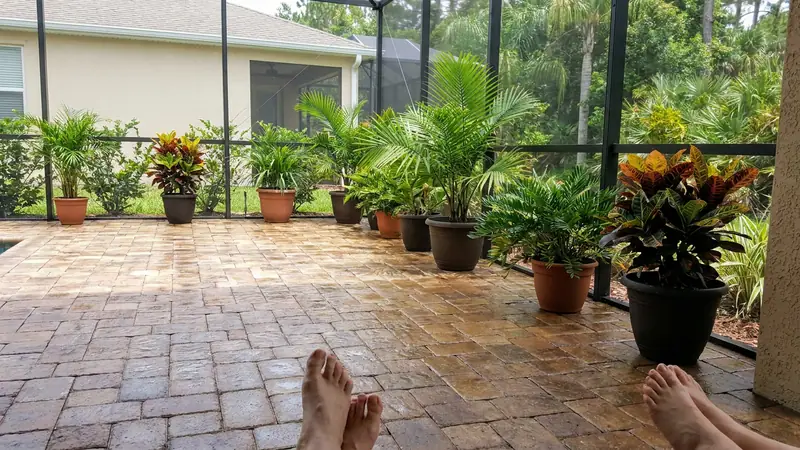
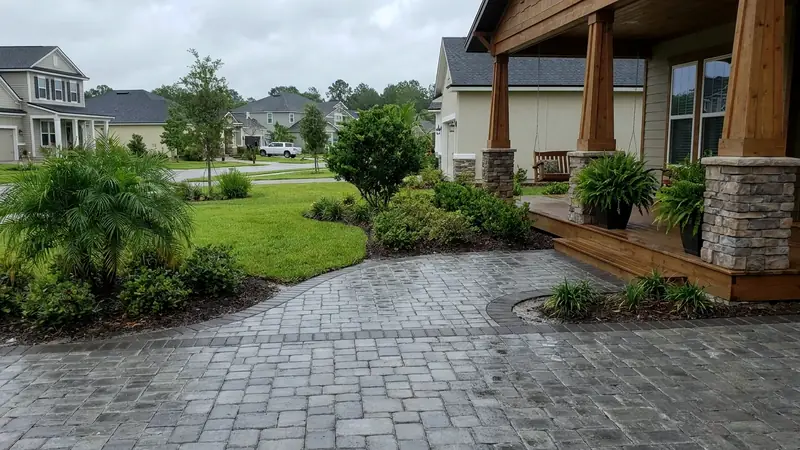
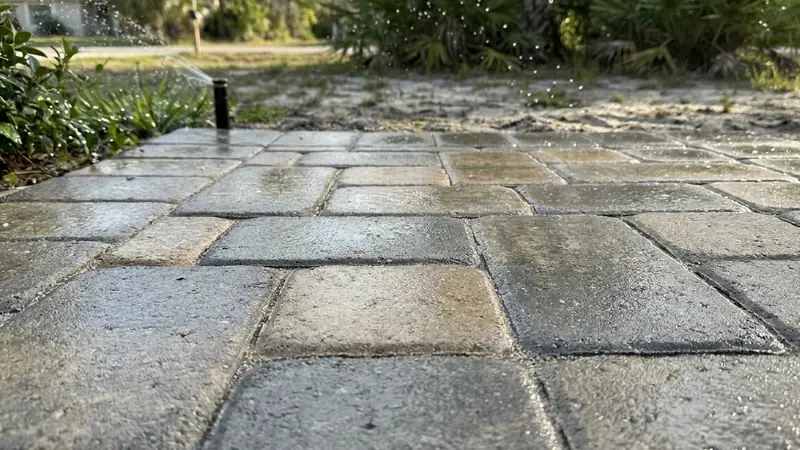
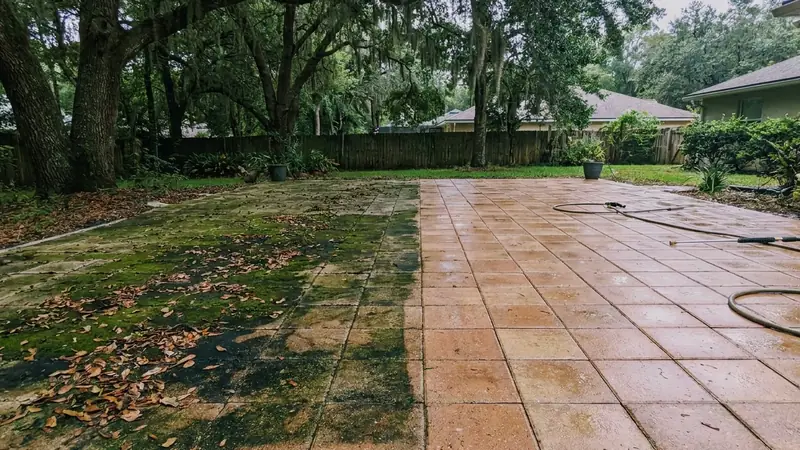
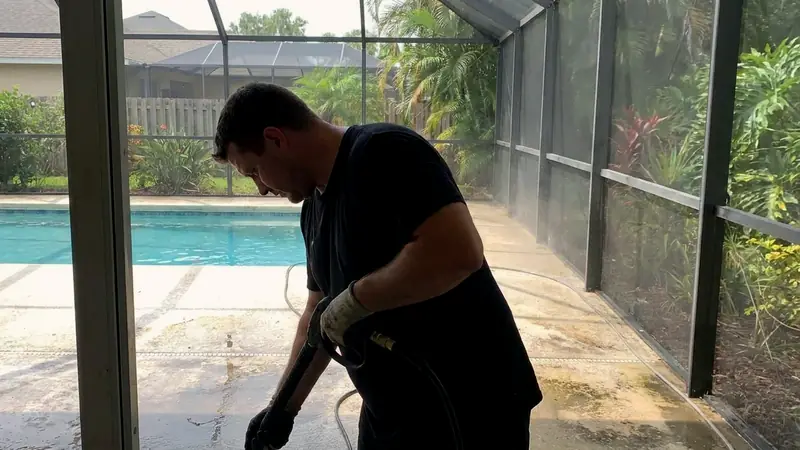
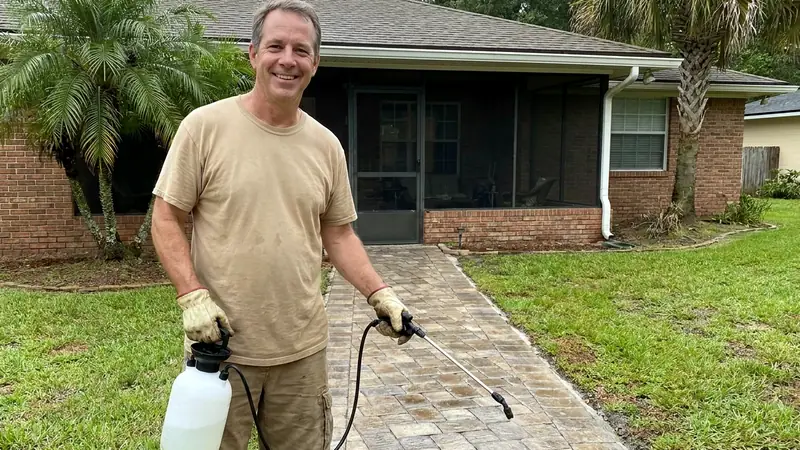
What do sealed pavers look like around South Daytona?
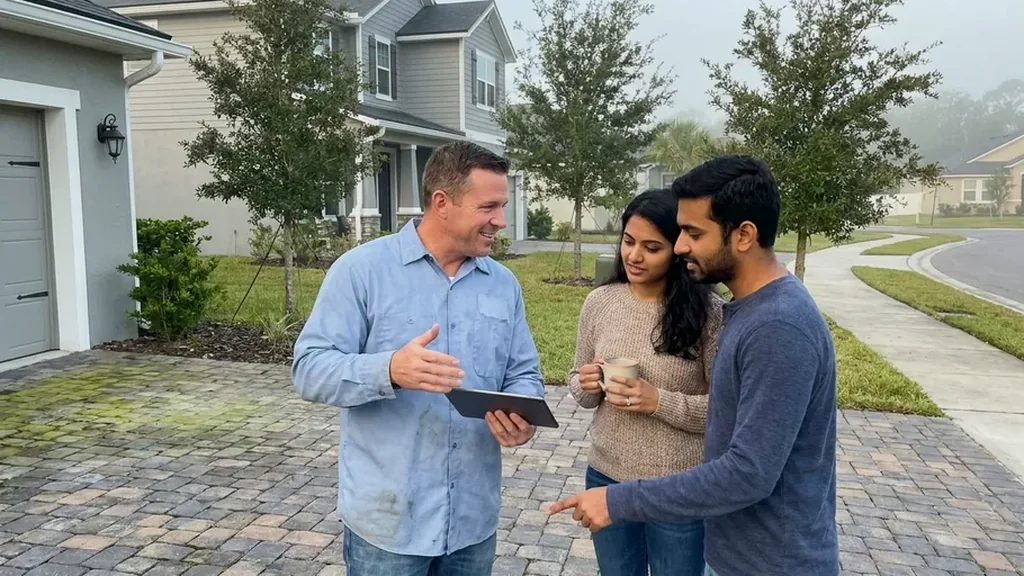
Why local matters in South Daytona
A contractor who works in South Daytona knows the town sits low and close to the Halifax River. That is why the first question is where water stands after a storm. Someone from far away may skip it and seal over damp ground. To reach a contractor who works this part of Volusia County, dial (386) 666-4204.
Timing is the next piece. Humidity runs above 70 percent most of the year in this area, so a surface can take longer to dry than a weather app suggests. A local contractor waits for a truly dry surface instead of chasing the calendar, and you see fewer cloudy patches later. To hear how the contractor plans around the forecast, ask for a free estimate.
Older homes bring unknowns, and South Daytona has many long-time owners. A contractor familiar with the town expects a coat of unknown age and checks before choosing a product. That saves you from a hazy finish and a second bill, and it keeps the job honest. If your pavers have a past you cannot trace, phone (386) 666-4204 and say what you do know.
What is worth knowing about South Daytona before you call?
South Daytona began as Blake, a settlement named for Boston businessman Alpheus P. Blake, whose post office opened in 1878. A railroad station at Big Tree Crossing followed, and Blake's residents later left Daytona Beach to form their own town, which became a city in 1951. If you live near Ridgewood Avenue and want a quote, ask for a free estimate.
Today the city is 5.05 square miles on the Halifax River, with Reed Canal Park among its public spaces. The city is also at work on stormwater upgrades in residential neighborhoods. Residents can join a Do Not Knock Registry to limit door-to-door sales visits, so a call you place yourself is the calmer way to hire. Wet ground and old streets both matter for pavers, so reach a contractor at (386) 666-4204 and share what you see on your driveway.
Frequently Asked Questions
Is it good to seal pavers in South Daytona?
Yes, for most driveways, since sealer slows fading and helps hold sand in the joints. Local humidity above 70 percent and frequent storms wear on unsealed pavers. Sealing before the color fades is the better bet. Ask the contractor which finish suits your house. South Daytona's humidity is the reason shaded pavers go green first.
How much does it cost to have pavers cleaned and sealed in South Daytona?
Published figures for this region run $1.50 to $3.00 per square foot for the wash, sand and seal. The old sealer, algae and missing sand move your price inside that range. Have the total area written into the quote, so bids line up fairly. The estimate itself is free. A drop in price usually means a step was left out. Ask what the estimate includes. A pool deck or a long walkway adds to the total, and the contractor can show each surface as its own line.
Why is paver sealing so expensive for a South Daytona driveway?
Most of the money goes into prep, not the sealer. Washing, drying and replacing joint sand take hours, and small jobs cost more per square foot. Stripping a failed coat adds more. A bid that skips prep may look cheaper, but the coat will not hold as long. Ask what each line of the quote covers, so you can see where the hours go. Compare bids line by line. No two South Daytona lots take the same prep time, which is why the estimate comes after a visit.
Is it better to spray or roll paver sealer?
Contractors usually do both. A Jacksonville paver company says rolling alone can leave lap marks, while spraying alone can lay on too much on textured pavers. Spraying and then back-rolling evens out the coat and works it into the joints. Ask which method your contractor uses. A good contractor can explain the choice in a sentence. Whichever method is used, ask for it in the written estimate.
How often do pavers need resealing in South Daytona?
Quotes for the span between coats run two to five years. Full sun, tires and sprinkler spray push a driveway toward the short end. Shade may stretch it. Pour a little water on a dry day: if it soaks in and darkens the paver instead of beading, the coat is spent. A quick test on a dry day shows you where yours stands. On the river side of town, check more often.
Can new sealer go over what is already on my South Daytona pavers?
Not always, because water-based sealer will not bond over solvent-based sealer. The contractor has to learn what is on the surface first, often with a test patch. Aged solvent coats can also turn white in humid air. A saved receipt or product name can settle the question. If the surface looks patchy or peeled, say so on the first call. Many South Daytona owners inherit pavers from the last owner, so this question comes up often.
Can sealing fix sunken pavers?
No, sunken or lifted pavers need repair before sealing. Sealer over a dip only holds it in place. Point out low spots at the first visit so the contractor can list the repair on the quote. On a home with an older driveway, there may be more than one low spot. On a lot where stormwater drains slowly, the low spot may also hold water after rain.
Do pavers need to be dry before they are sealed in South Daytona?
Yes, sealer needs a dry surface. After a storm or heavy dew, the contractor may wait a day or more. Shaded spots and low areas dry last, so they decide the start time. A rushed job risks a cloudy finish. Hold the sprinklers back until the contractor confirms the coat has cured. Humid mornings near the Halifax River can leave dew on pavers well into the day.
Ready for a Free Estimate in South Daytona?
Call (386) 666-4204 and tell us about your pavers.
Free, no obligation