
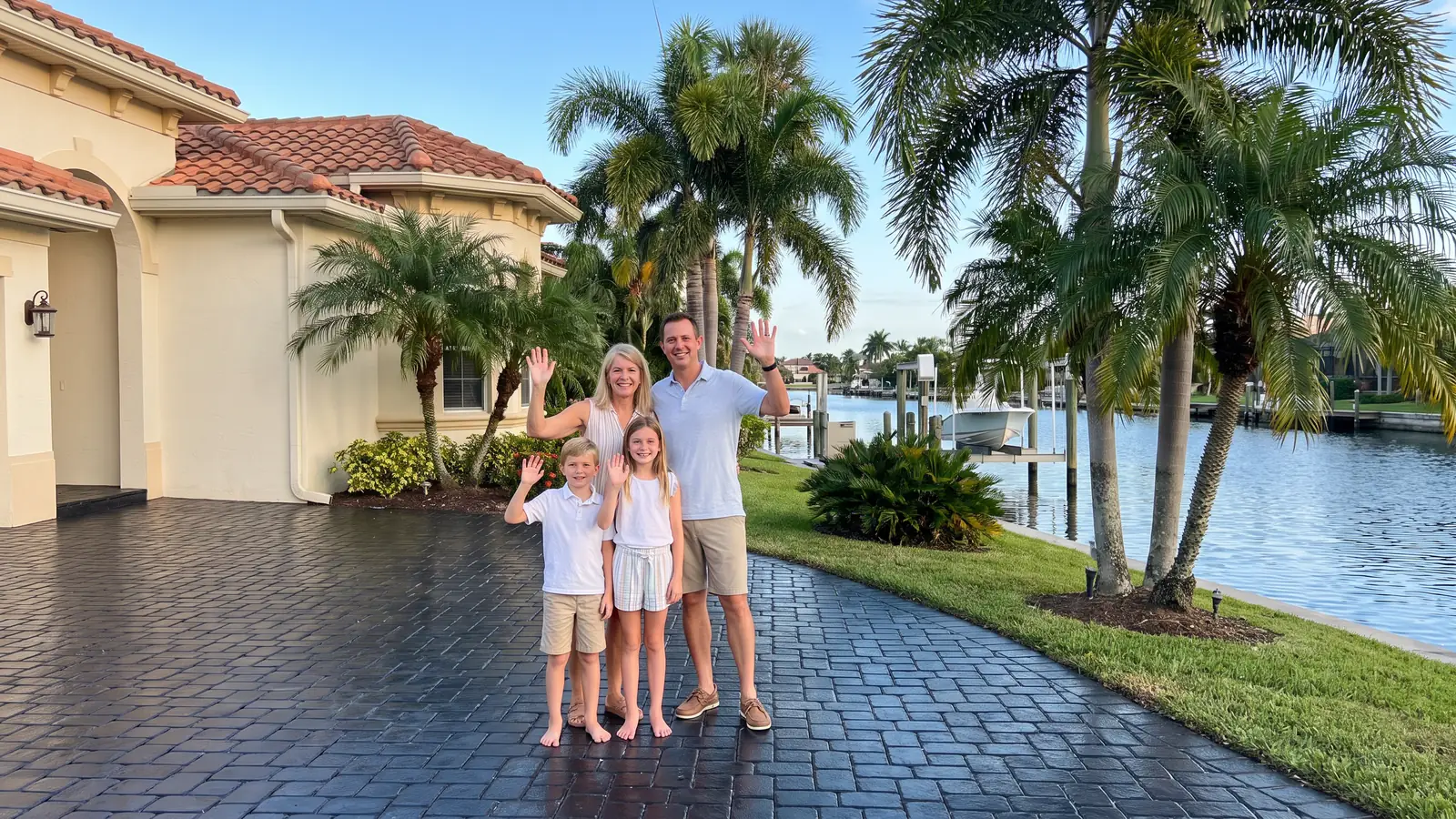
Paver sealing for St. Augustine homes
Paver Sealing in St. Augustine, FL
In St. Augustine, pavers sit beside coquina, old brick and heavy rain, so ring (386) 666-4204 for a free estimate.
- Brings out deeper paver color
- Fresh joint sand helps lock pavers in place
- Gives weeds less room to grow
- Makes the surface easier to keep clean
- Free estimate, no obligation
Request a Free Estimate
Free, no obligation.
Fast, careful paver sealing in St. Augustine
Paver sealing in St. Augustine is available for driveways, courtyards, garden paths and pool decks, whether your home is inside the old city or out toward the newer streets. A local contractor washes the pavers, puts fresh sand back in the joints and seals the surface. The estimate is free, and the first reply comes inside 1 business day, often within hours. To start the conversation, dial (386) 666-4204.
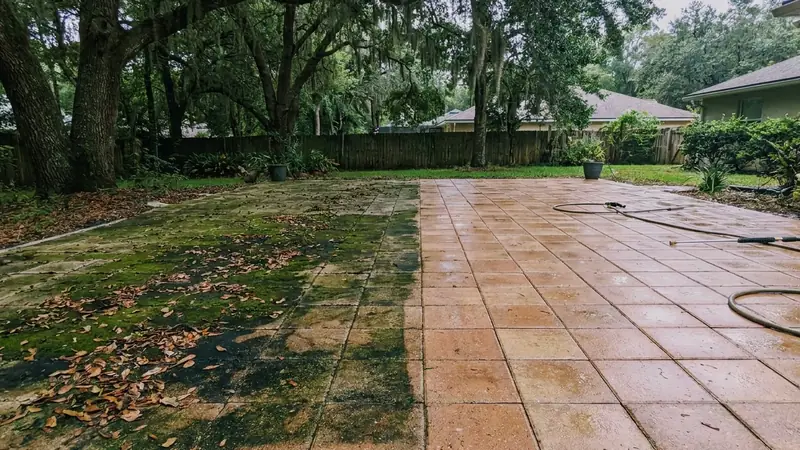
Picture a courtyard where the color has washed out, the joints are empty and a green film runs along the shaded wall. After a careful wash, new sand and a fresh coat, the same courtyard looks even and clean again. When you are ready, you can ask for a free estimate and describe your pavers in a sentence or two.
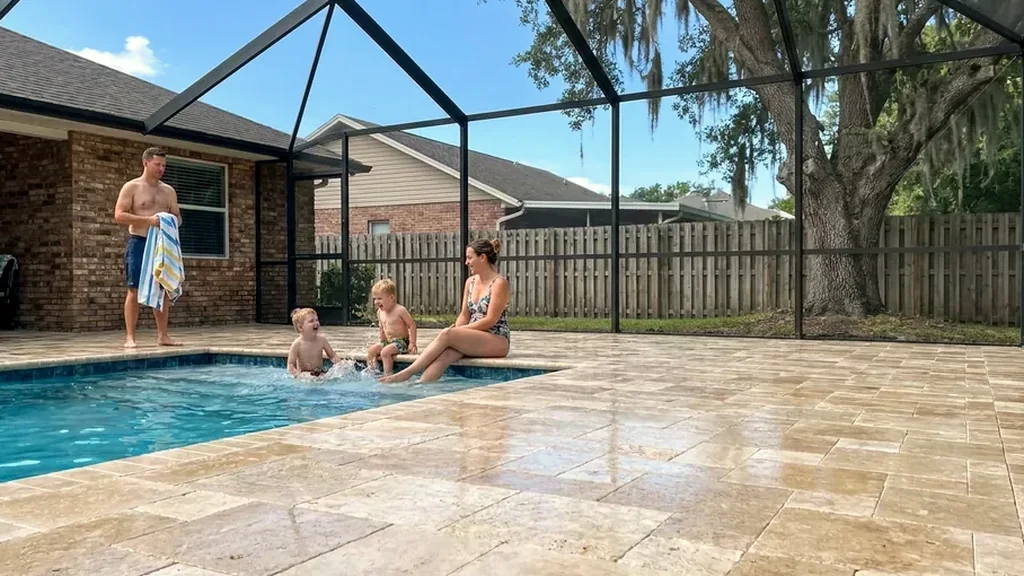
Why hire a local paver sealing contractor in St. Augustine?
St. Augustine is a city of old streets, tight lots and heavy rain, and each of those changes how a paver job should go. A local contractor already thinks about them, so to hear how that applies to your home, reach a contractor at (386) 666-4204.
A free first visit
The contractor looks over your St. Augustine pavers and names a price before you commit to anything.
A range to measure by
Across the region, companies publish $1.50 to $3.00 per square foot to clean, sand and seal. Compare each St. Augustine bid with it.
Care near old masonry
Coquina and historic stucco call for soft washing. Tell the contractor what stands beside your pavers so rinse water stays gentle.
The decision stays yours
You pick the finish and the day. A St. Augustine estimate carries no duty to hire.
Get Your Free Estimate in St. Augustine
Tell us about your pavers in St. Augustine.
Free, no obligation
What paver problems show up most in St. Augustine?
Salt and humidity near the bay
A St. Augustine paver company says salt air from the Matanzas River and bay can crystallize in paver pores and shorten reseal cycles to 2 to 3 years near the water, against about four elsewhere. Matanzas Bay lies just east of downtown, and the Bridge of Lions crosses it to Anastasia Island. That means pavers close to the bay may need attention sooner than pavers farther inland, and a driveway on the water side may be the first to look tired. A quick look each spring tells you where yours stands. Ask about the age of your pavers when you call, since older installs may have looser sand. The Castillo de San Marcos, finished in 1695, and the old city gates were built of coquina, which shows how long this stone has stood beside the bay. Newer pavers share that salt air.
Joint sand washed out by sprinklers and storms
A local paver sealing company says most installs here were filled with play sand, which afternoon storms and sprinkler cycles wash out. St. Augustine gets daily thundershowers in summer, and the brief downpours are intense. When joints empty, pavers loosen at the edges and weeds start to grow. Sinking or rocking pavers need an installer to reset them before any sealer goes on. Look at the joints along the driveway edge after the next storm, because that is where loss shows first. Summer here brings daily thundershowers, and the city notes that intense but brief downpours are common. Pavers laid in play sand take the worst of it.
Standing water after rain and tides
The city says about 90 percent of residents live in a floodplain, and regular rain can flood streets when it lines up with high tides. Hurricane Matthew flooded downtown in October 2016. Pavers that sit in water for hours collect silt and grow algae. A driveway that drains slowly is a driveway that needs a thorough wash before sealing. Ask the contractor to measure how long the surface takes to drain after a rain, so you know what to expect. Fullerwood Park and Nelmar Terrace both run to Hospital Creek on their east sides, so a wash there should account for how water moves. Ask the contractor how your yard drains.
Old coats that turned cloudy or peeled
A St. Augustine pressure washing company says that if water soaks in and darkens a paver quickly, the old sealer is gone. It also says peeling, cloudy sealer should be stripped before resealing. Water-based sealer cannot go over solvent-based, so a mystery coat from a past owner can change the plan. A small test spot shows what you are dealing with. A short test with a few drops of water on a clean corner shows whether the old coat still beads. A past owner may have sealed the pavers, and an old film can hide under dirt. A contractor can test a small spot before planning.
Delicate neighbors: coquina and stucco
Safe Touch says coquina and historic stucco around St. Augustine need soft-wash methods, not pressure. Wikipedia notes that exposed coquina masonry is slowly deteriorating where lime plaster has gone. If your courtyard pavers meet an old wall, harsh spray can hurt the wall. A contractor who knows this keeps pressure low and rinse water away from the masonry. Point out any old wall, planter or fountain near the pavers when you call, so the plan protects it. The Historic Architectural Review Board can weigh in on materials in historic areas. If your home is in one, the city's guidelines document is the place to start before any change.
Do the historic districts change how I should seal pavers in St. Augustine?
Yes, they can, because rules and surfaces in the older districts differ from newer streets. In April 2026 the city's Historic Architectural Review Board refused a certificate of appropriateness for a landscape-block paver driveway on Saint George Street that was already installed, and ordered it removed. Sealing is not installing, but call the city before changing a paver surface in a historic area, then ask for a free estimate.
Fullerwood Park, bounded by Hildreth Drive, Macaris Street, San Marco Avenue and Hospital Creek, was added to the National Register in 2010, and Nelmar Terrace followed in 2011. Lincolnville, founded by freedmen in 1866, was listed in 1991. Homes in these areas may sit close to old walls and trees, so call (386) 666-4204 and tell the contractor which neighborhood you are in.
Out beyond the historic core, newer subdivisions have wider driveways and pool decks with the same salt and rain. The main difference is that you are less likely to have coquina next to your pavers. Either way, mention the age of your home and the type of pavers when you ring (386) 666-4204, so the estimate fits. Gentle rinse water protects plants and neighbors' yards alike.
What does paver sealing cost in St. Augustine?
Across the region, companies commonly publish $1.50 to $3.00 per square foot for the clean, sand and seal. A St. Augustine price moves with how much algae is on the pavers, how empty the joints are and whether old sealer has to be stripped. Larger areas cost more in total at the same rate. To see a figure for your home, ask for a free estimate.
Access and care add to a quote as well. A tight courtyard behind a historic home means hauling gear by hand and rinsing gently near old walls, and a pool deck may add a traction additive. Sinking pavers need to be reset before sealing, and that is a separate job. Dial (386) 666-4204 and the contractor can sort out which of these fit your house.
| Paved area | Typical example | Clean, sand and seal |
|---|---|---|
| 300 sq ft | Small patio or walkway | $450 to $900 |
| 600 sq ft | Two car driveway | $900 to $1,800 |
| 1,000 sq ft | Large driveway or pool deck | $1,500 to $3,000 |
| 1,500 sq ft | Driveway plus pool deck | $2,250 to $4,500 |
Math based on the $1.50 to $3.00 per square foot that Northeast Florida paver companies published as of November 2026. Your contractor sets the actual price after seeing the surface. Repairs, leveling and stripping failed sealer are usually extra.
How does a paver sealing job work in St. Augustine?
Look at the pavers, the walls and the old coat
The contractor walks the property and notes where water drains, where shade lingers and what stands beside the pavers, such as coquina, stucco or brick. Sinking or rocking pavers are marked, since a local company says they need an installer to reset them first. The old coat is checked too, because water-based sealer cannot go over solvent-based sealer. Photos of the surface help the contractor plan the first visit. If your pavers sit near a coquina wall or a planter bed, point that out, since the contractor will adjust the wash. Photos of the wall help.
Wash gently and treat the green growth
The wash uses low pressure where the pavers meet old masonry, because coquina and historic stucco need soft-wash methods. Algae, silt, rust and oil stains are treated at this stage. Peeling or cloudy sealer is stripped if it is there. Sealer locks in what is on the surface, so a clean base sets the final look. Ask the contractor to explain how rinse water will be kept off any old wall or plantings. The contractor also asks where the surface stays wet longest, since those spots take the most washing.
Put new sand into the joints
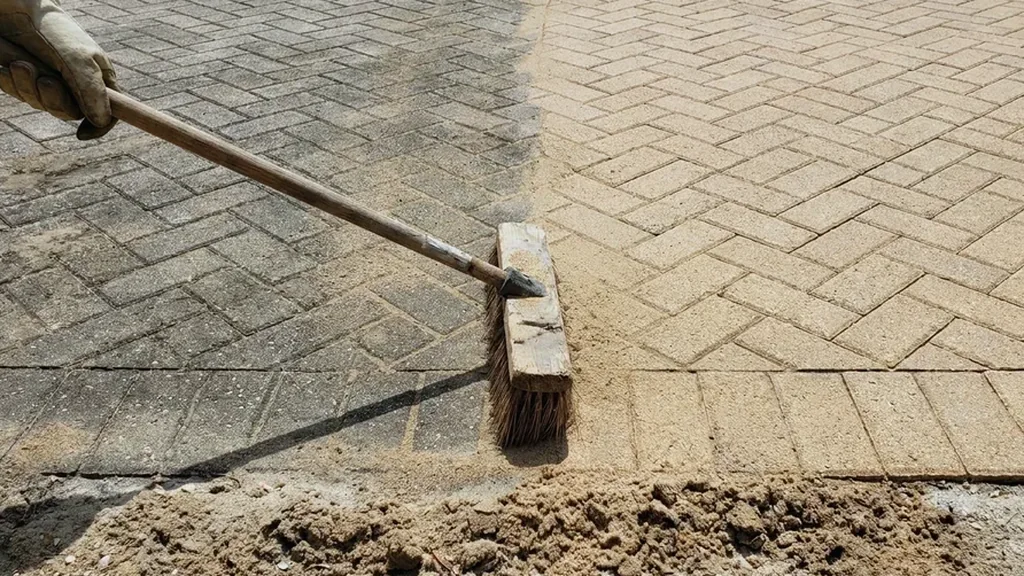
Washing removes joint sand, so it must be replaced before sealing. A local company says many installs here used play sand that storms and sprinklers wash out, so fresh joint sand is worth doing well. The joints are filled, packed and swept. Full joints keep pavers in place and give weeds less room to start. On a courtyard, the contractor may fill in sections to keep the work tidy and reduce tracking sand into the house.
Let the surface dry
Sealer needs a dry surface. In summer the thundershowers here come most afternoons, so the contractor picks a clear morning and checks that the pavers are dry to the touch. Shaded courtyards can stay damp for hours after a wash. A one-day delay is cheaper than redoing a cloudy coat. Pets and children should stay off until the contractor says the surface is ready. On a shaded courtyard the wait can run long, and the contractor may split the work across two visits. That is normal in damp weather.
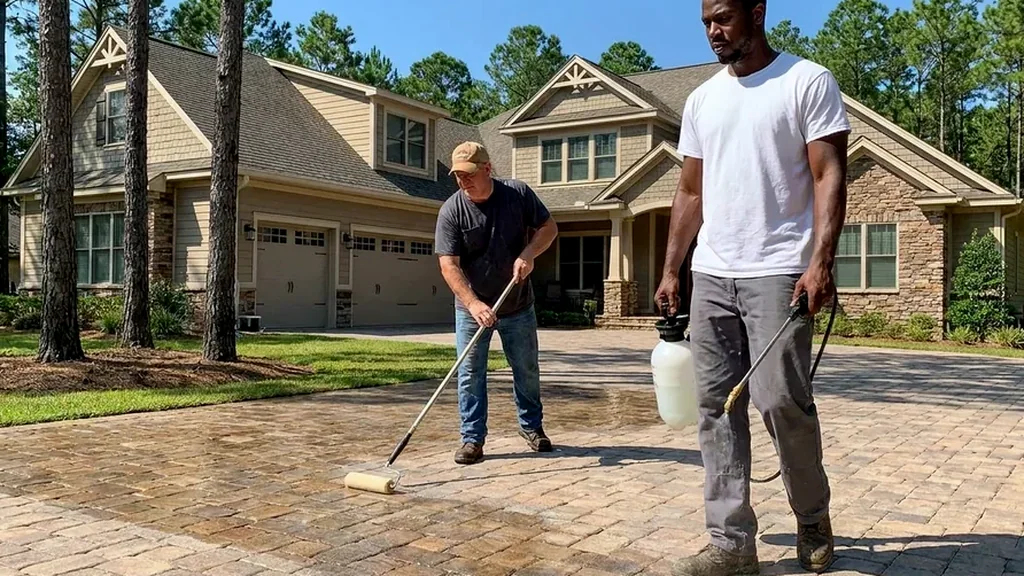
Seal, then keep traffic off
Pros typically spray the sealer and then back-roll it, a Jacksonville company says, which works it into the joints. On pool decks, a traction additive can be mixed into the final coat. Light foot traffic is usually fine within hours, but cars should wait about a day. Save the product name for the next recoat. A short walk-through at the end lets you point out any spot that needs a touch-up. Ask the contractor to confirm the cure time for the product used. A final walk-through lets you check the finish in daylight, since indoor light and shade can hide patches.
Complete paver services in St. Augustine
A St. Augustine job has a fixed order. The pavers are washed, the joints get fresh sand, the surface dries and the sealer goes on. Washing comes first because silt, algae and old dirt would otherwise end up under the coat. For the timeline on your property, phone (386) 666-4204.
Courtyards, driveways, garden paths and pool decks are the usual surfaces. Courtyards often meet old walls, so rinse water has to stay gentle, while driveways take tires and sun. Pool decks need grip, and a traction additive can help. Tell the contractor what you have when you ask for a free estimate.
Sealer comes down to two decisions. Water-based or solvent-based comes first, and the existing coat settles it because one cannot go over the other. Matte or wet look comes second: matte sits quietly beside coquina and brick, while wet look deepens color but shows scuffs sooner. Ring (386) 666-4204 to talk finishes.
The dry season here runs November through April and the wet season May through October. Pavers must be dry before sealing, so cooler months give the easiest booking. Spring can bring water restrictions, which changes how sprinklers hit your pavers. For an open date that fits the weather, reach a contractor at (386) 666-4204.
Questions to ask before you hire
- Will you note the date of each coat, so I know when to book the next one?
- Which hours will the pressure washer be running, so I can give my neighbors a heads-up?
- Can you tell me the cure time in writing, so I know when the movers can bring the truck in?
- My sprinklers run on reclaimed water, so will it leave marks on the sealed pavers?
- Can you add grit if my kids ride bikes and scooters on the driveway?
- Can the front walkway and the back lanai be sealed on different days?
- Does the job change if my pavers are laid in a herringbone pattern?
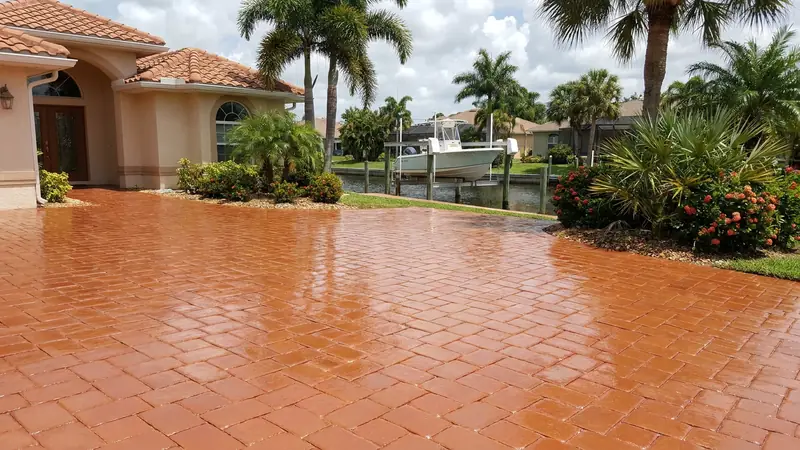
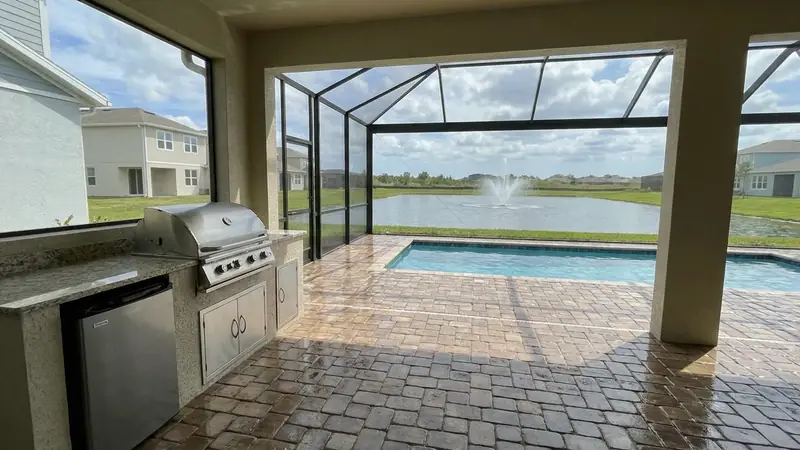
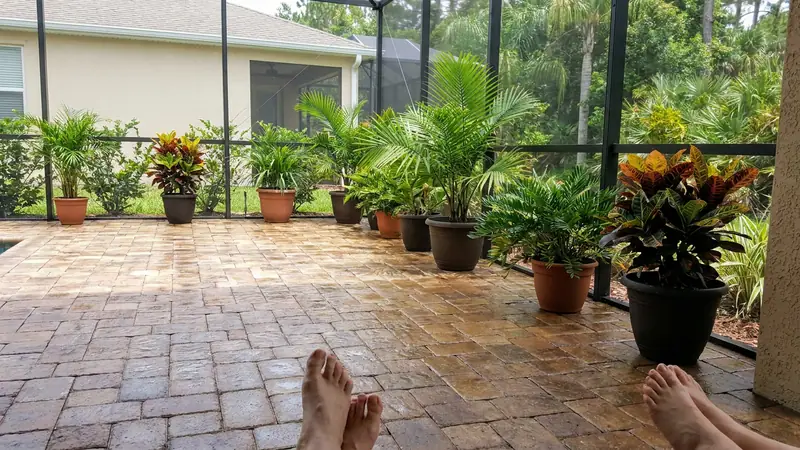
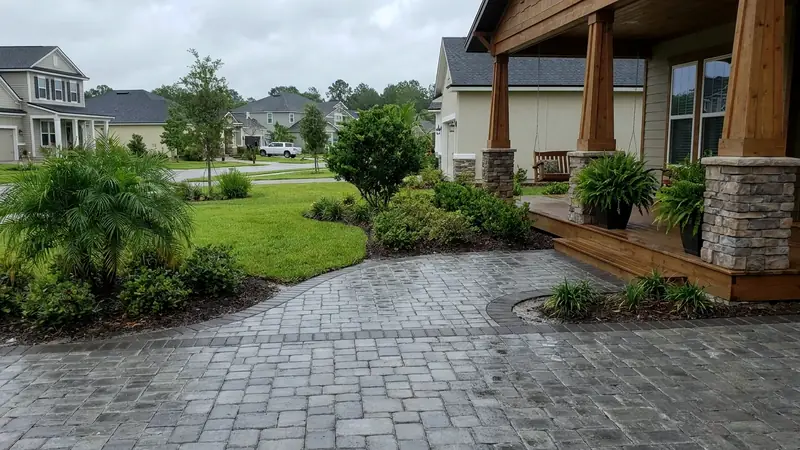
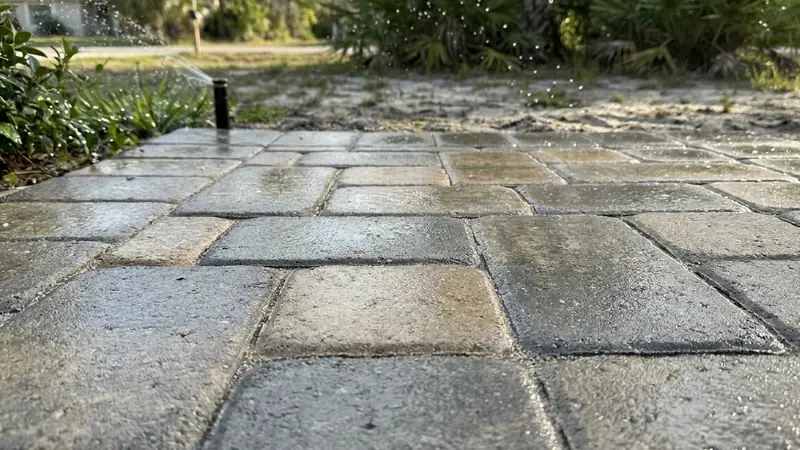
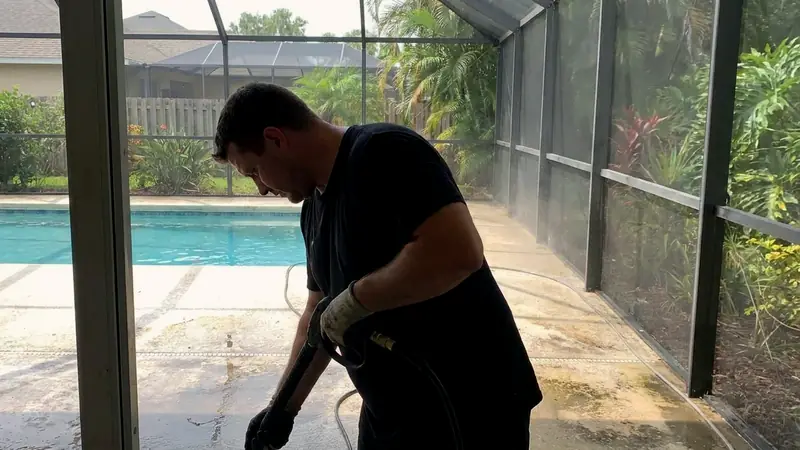
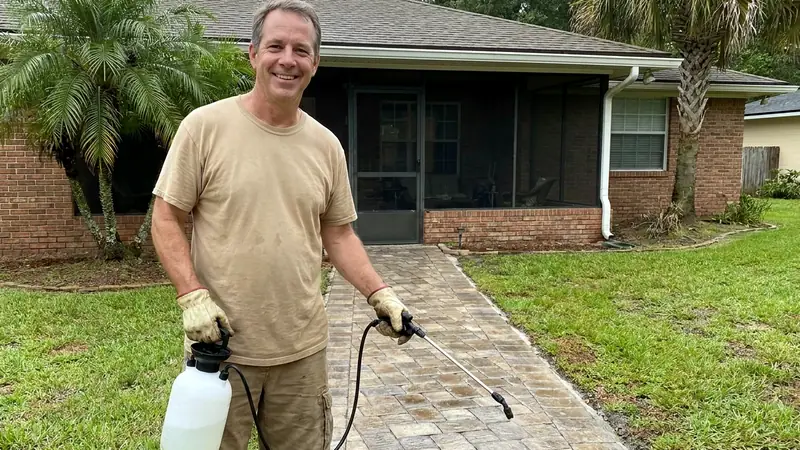
What do sealed pavers look like around St. Augustine?
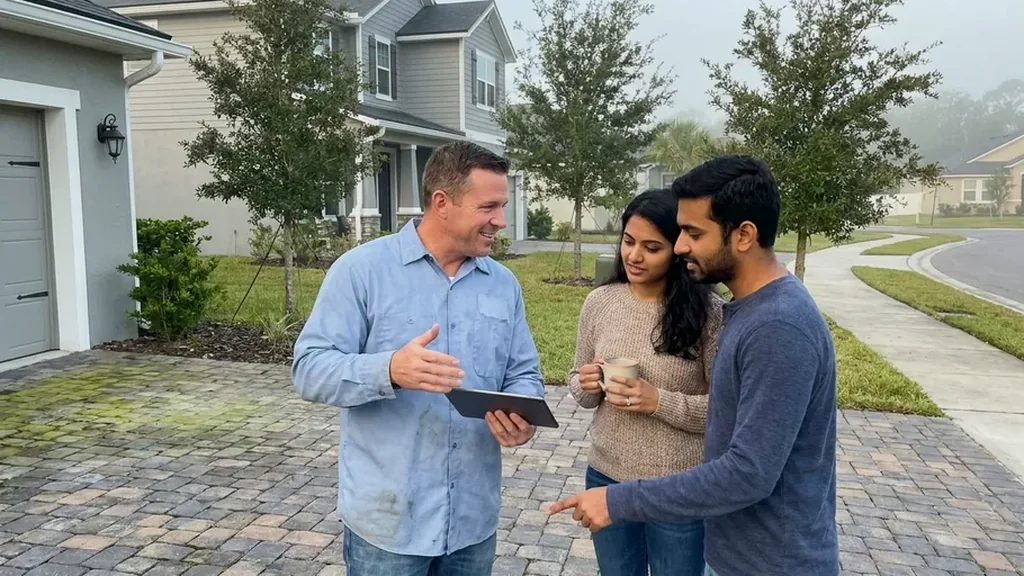
Why local matters in St. Augustine
A contractor who works St. Augustine knows the old city is full of surfaces that need a light hand. Coquina, historic stucco and brick all sit beside pavers here, and each reacts differently to water and pressure. A contractor can also tell you when a spot needs a different method. To reach one who works this part of St. Johns County, reach a contractor at (386) 666-4204.
Local knowledge helps with water, too. About 90 percent of residents live in a floodplain, according to the city, and rain plus high tide can flood streets. A local contractor asks how your yard drains and where water pools, and photos of low areas help. You can phone (386) 666-4204 and mention any low spots you have noticed.
Timing matters as much as product. Summer afternoons bring thundershowers, and the dry season from November through April gives longer windows. A local contractor plans around that and leaves spare days in the schedule. Call (386) 666-4204 and ask how a weather delay would be handled, including the plan for drying time.
Does it help to hire someone who knows St. Augustine's old city?
Yes, because the oldest parts of town are full of materials and rules that newer suburbs do not have. Pedro Menendez founded St. Augustine in 1565, the Castillo de San Marcos was finished in 1695 and the Hotel Ponce de Leon opened in 1888. Archaeologists found brick as the first permanent street material downtown, and the city later required repair of its surviving brick streets. If you live near those streets, ask for a free estimate and mention the age of your home.
The Bridge of Lions, finished in 1927, links downtown to Anastasia Island across Matanzas Bay, and the lighthouse has stood since 1874. Hurricane Matthew flooded downtown in 2016, and the water reached many yards. Near any of these landmarks, phone (386) 666-4204 and tell the contractor where you are. The contractor can then plan around that.
Frequently Asked Questions
Do I need approval to change pavers in a historic district of St. Augustine?
It can depend on where you live. In April 2026 the city's review board ordered a landscape-block paver driveway removed on Saint George Street. Sealing is different from installing, but call the city's Planning and Building Department first if your home is in a historic district. Say whether your home is in one when you call. The Architectural Guidelines for Historic Preservation, published by the city, are the document to ask about for materials.
Can I pressure wash brick pavers in St. Augustine?
A contractor can, but pressure has to be matched to the surface. Brick and coquina are softer than concrete, and Safe Touch says coquina and historic stucco need soft-wash methods. Washing also removes joint sand, so it must be replaced before sealing. Washing also removes joint sand, so a contractor replaces it before sealing.
What is the cost per square foot to seal pavers in St. Augustine?
Plan on $1.50 to $3.00 per square foot to clean, sand and seal, the range companies in this region commonly publish. A St. Augustine total depends on algae, empty joints, old sealer and how many pavers need resetting first. Resetting loose pavers is separate work. Resetting sunken pavers is priced separately from sealing, so ask whether your quote includes it.
Does sealing stop weeds between pavers in St. Augustine?
It cuts back weeds but does not end them. A Jacksonville paver company says sealing reduces weed and ant intrusion and makes the next cleaning easier. Full joint sand is the real barrier, which is why new sand goes in before the coat.
Is it good to seal pavers in Florida, and does it matter in St. Augustine?
Yes, it helps, because sun, salt and heavy rain wear on bare pavers. A St. Augustine company says salt air near the bay can shorten reseal cycles to 2 to 3 years near the water. A coat holds color and joint sand in place and eases later cleaning. Matte finishes also work well beside older masonry. Matte also suits courtyards with older brick, since it looks natural.
How long does paver sealer last near St. Augustine's bay and river?
A recoat tends to come due somewhere between two and five years out, per local quotes. Near the water the shorter end is likely, and one local company puts it at 2 to 3 years. If water soaks in and darkens the paver quickly, the coat is gone. Ask whether a second coat is planned, since that changes both the look and the cost.
What does a quote for paver sealing in St. Augustine include?
A good quote lists the area, the washing, the joint sand and the sealer type. It should say whether old sealer has to be stripped. Ask whether sinking pavers are included, since resetting them is separate work.
What should I expect after I ask for a St. Augustine estimate?
Look for a first reply inside 1 business day, usually quicker. You can ask for the estimate and still decide against the work. A short note about the surface, such as a courtyard with empty joints, is enough to start.
Ready for a Free Estimate in St. Augustine?
Call (386) 666-4204 and tell us about your pavers.
Free, no obligation