
Rust, oil and leaf marks lifted from pavers
Paver Stain Removal in Palm Coast, FL
Name the stain on your driveway or lanai and get a free Palm Coast estimate at (386) 666-4204.
- Brings out deeper paver color
- Fresh joint sand helps lock pavers in place
- Gives weeds less room to grow
- Makes the surface easier to keep clean
- Free estimate, no obligation
Request a Free Estimate
Free, no obligation.
Can a Palm Coast contractor lift stains off my pavers, and how quickly?
Paver stain removal is available across Palm Coast, FL, and a local contractor replies within 1 business day, frequently much faster. The estimate costs nothing and you can say no. To describe the stain, call (386) 666-4204.
A paver is a porous block, so a stain does not sit on top the way spilled paint sits on a table. Oil, rust and leaf tannins move into the surface, and the right treatment depends on which one it is. A contractor identifies the stain, tests a small spot and then treats it, instead of scrubbing everything with one cleaner. Share where the mark is and what caused it when you ask for a free estimate.
Which towns near Palm Coast can ask about stain removal?
Palm Coast homes and the nearby towns below can ask for a stain estimate, and each town has its own page. If your street is not listed, call (386) 666-4204.
What is the stain on my pavers, and does the fix change?
The fix changes a lot. A paver maker's care list matches each stain to its own product, and a paver maker's guide says to test one or two pavers before treating a whole area. Here is how the common Palm Coast stains split up. To have a contractor name yours, call (386) 666-4204.
Oil and grease
Car drips and cooking grease. A degreaser lifts the surface film and a poultice pulls out what soaked in.
Rust
Orange streaks from sprinklers, furniture feet and metal hardware. A rust remover for masonry is used, then the source is fixed.
Leaves, mulch and wood
Brown tannin stains from trees and beds. They respond to oxygen or chlorine style cleaners, and they return each year.
White film
Often efflorescence, which is salt rising to the surface. It has its own remover and is not a stain in the usual sense.
Paint, tar and tire marks
Each needs a product made for that material. Fresh paint is blotted up, not wiped, to keep it from spreading.
Planter rings and grill grease
Dark circles under pots and grease near the cooking area. A Flagler and Volusia company lists both as common on patios.
How are oil and grease stains lifted from pavers?
Two steps, in order. A degreaser goes on first to clear the oil near the surface, which also shows how deep the rest goes. PROSOCO, a masonry cleaner maker, says this step reveals deeper stains once the pavers are dry. For oil that has soaked in, a poultice is poured on and left to dry. To have a driveway stain looked at, call (386) 666-4204.
A poultice pulls oil out as it dries. PROSOCO puts the drying time at about 5 to 8 hours, and a Cambridge Pavers care list gives 6 to 8 hours until it dries to a powder that is swept up. Most stains come out in one pass, while deep ones can need a second. The same maker says a quart covers under 6 square feet and a gallon up to 24, so a single drip stain is a small job. For a price on yours, ask for a free estimate.
Where do rust stains on Palm Coast pavers come from?
The usual sources are sprinklers, metal furniture and fertilizer. UF/IFAS says orange streaks on buildings often come from irrigation water that is high in iron, and that most Florida well water is high in iron. That water leaves rust deposits on anything it touches, pavers included. Where the sprinkler spray lands is where the streaks appear. To find out why yours are there, call (386) 666-4204.
Removal uses a rust remover made for masonry, scrubbed in and repeated as needed. Cambridge Pavers warns that rust remover can damage sealer, so the area may need a fresh coat once the stain is gone. Fixing the source matters as much as the cleanup, since streaks come back when the water does. For a plan that covers both, ask for a free estimate.
Why do leaves, mulch and wood leave brown marks, and will they return?
Tannins in leaves and wood soak into porous pavers, which is why a fall of wet leaves can leave a brown print. A paver maker lists a bleach style cleaner for leaf stains and an oxygen cleaner for mulch and wood stains, and in both cases tells owners to test one paver first. Because the trees keep dropping leaves, the stain keeps coming back. To plan for beds and trees along your driveway, call (386) 666-4204.
The paver maker's own advice is blunt: the leaves fall every year, so the decision is whether to live with the tree or remove it. A coat of sealer will not stop the staining, though it can make each new mark easier to wash off. Share where the trees stand when you ask for a free estimate.
Is the white film on my pavers a stain?
Usually it is efflorescence, a different problem. Wikipedia describes efflorescence as salt moving to the surface of a porous material, where it forms a coating. On concrete pavers it often shows up in the first months after a new install and fades with time. Cambridge Pavers lists a special efflorescence remover. Before treating it, a contractor confirms it is not failed sealer. To have the film checked, call (386) 666-4204.
Can grill grease and dark rings under planters come out?
Often, yes. A Flagler and Volusia County company lists food and grease stains from outdoor cooking and dark rings around planters, furniture and busy spots as common patio problems, and a customer quote on its page says mineral rings from potted plants lifted completely without shifting any pavers. The method depends on the material and on how long the mark has been there. To ask about a patio, ask for a free estimate.
Will stain treatment damage my sealer or my pavers?
It can if it is done carelessly, which is why a test spot comes first. A Flagler and Volusia company warns that aggressive cleaning can damage the surface. A rust remover can damage sealer, according to Cambridge Pavers. High pressure can also chip stone and push the sand out of the joints, so a wide nozzle held at an angle is the safer way to rinse. To ask how a contractor handles this, call (386) 666-4204.
PROSOCO suggests keeping pressure between 400 and 1,000 psi for its degreaser and covering plants, cars and nearby surfaces before treatment. Those steps matter on a canal lot, where runoff has a short path to the water. A careful contractor tells you how the rinse water will be handled. For a plan you can ask questions about, ask for a free estimate.
What stains do Palm Coast yards see most often?
Six sources show up again and again: sprinklers, trees, vehicles, grills, planters and pool areas. Many properties have two or three at once. To sort out which ones are on your lot, call (386) 666-4204.
Driveways
Oil drips where cars park, tire marks at the turn, and orange streaks from sprinklers along the edge.
Pool decks
Suntan oil, leaf prints from nearby trees and green growth where water lingers.
Lanais and patios
Grease near the grill, planter rings and furniture rust marks.
Canal and dock sides
Damp shade that turns small stains into green patches, plus metal hardware that drips rust.
What does paver stain removal cost in Palm Coast?
No Palm Coast page posts a price for stain treatment alone. The published piece is $1.50 to $3.00 per square foot to clean, sand and seal, from a Daytona Beach company, and stain work is usually a separate line on top. A 400 square foot patio would be near $600 to $1,200 for the full job. To get your stains priced, ask for a free estimate.
Three things move the number: how many stains there are, how deep they went and whether sealer has to be redone afterward. A single oil spot is a small job. Rust streaks along a whole driveway edge or a tire track lane are bigger. Ask for the stain work as its own line when you call (386) 666-4204.
Want the whole surface refreshed? See paver restoration and resealing, travertine sealing or the paver cleaning guide.
| Piece of the job | What is published | What it means at a Palm Coast home |
|---|---|---|
| Cleaning a whole area, then sand and sealer | $1.50 to $3.00 per sq ft | $600 to $1,200 for a 400 sq ft patio |
| Treating one embedded oil stain | A poultice maker says a quart covers under 6 sq ft and a gallon up to 24 sq ft | A stain the size of a doormat is a small product job and a few hours of waiting |
| Treating many rust streaks or a whole tire track lane | No page posts a rate | Quoted by the number of spots and the area, as its own line |
| Lifting and replacing a ruined paver | No page posts a rate | Quoted per paver, and only when a close match can be found |
The only per square foot rate in the table is the clean, sand and seal range from a Daytona Beach company's published page. Stain treatment itself has no published local rate, so ask for it as a separate line and compare it with the whole-area price.
Does a stain removal contractor in Palm Coast need a license?
A Levelset answer says Florida does not require a state contractor license for pressure washing, but a county or city may add its own rules and the local building department has the final word. Chemical use and runoff near canals are other things to ask about. Check before you book, and ask the contractor to explain how they are set up to work here. To start, ask for a free estimate.
What do pavers look like after stain removal in Palm Coast?
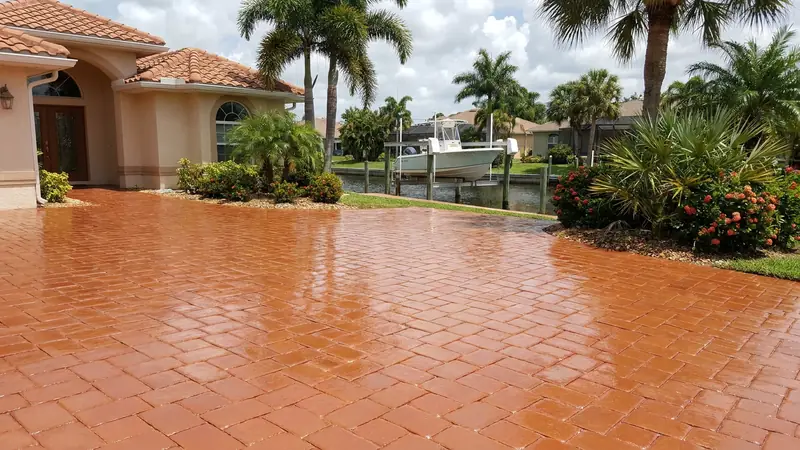
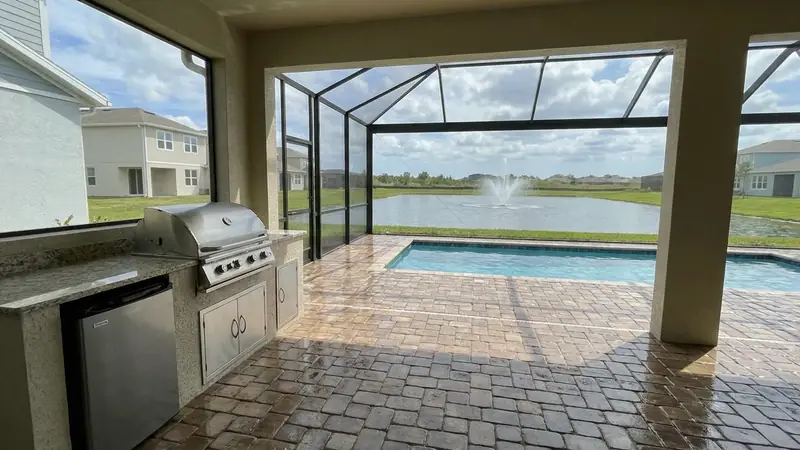
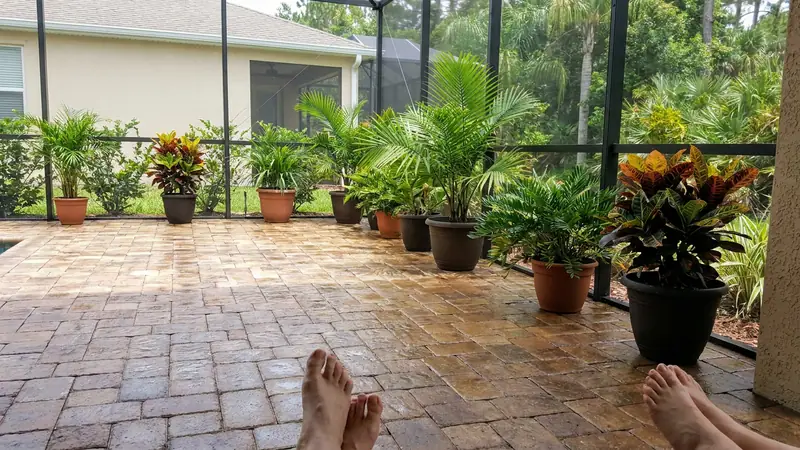
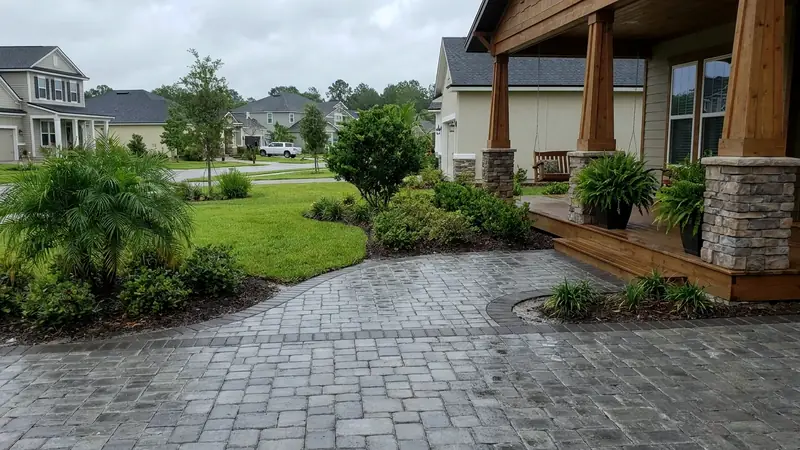
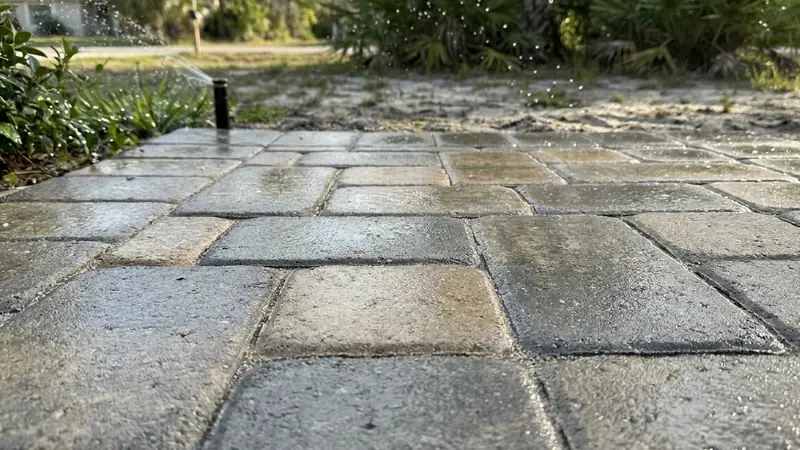
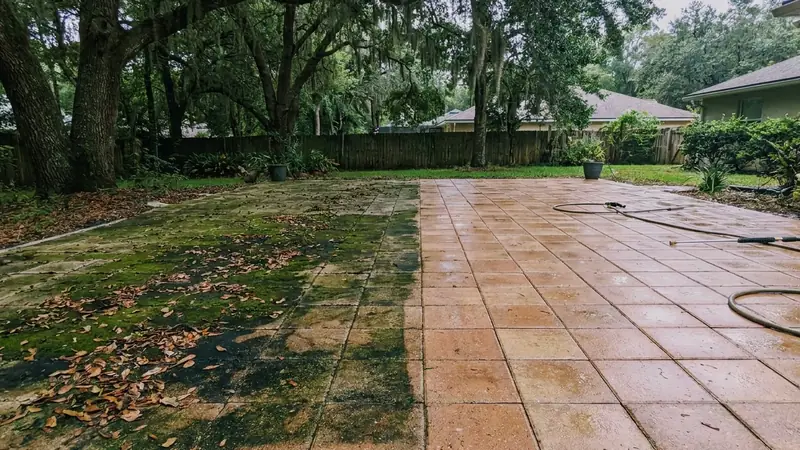
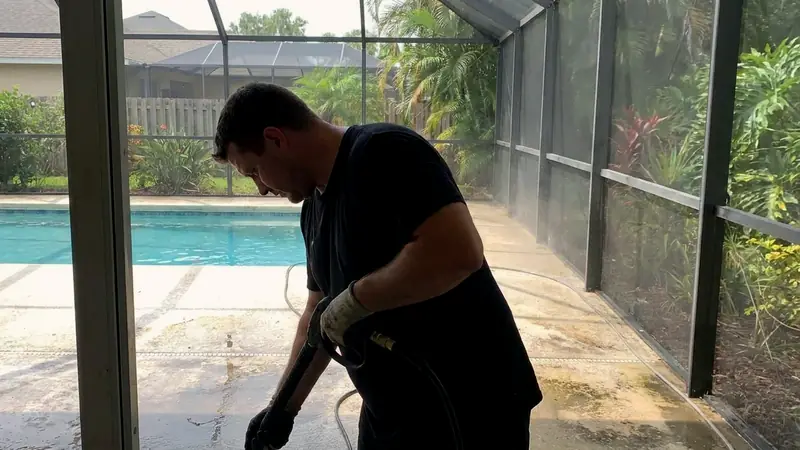
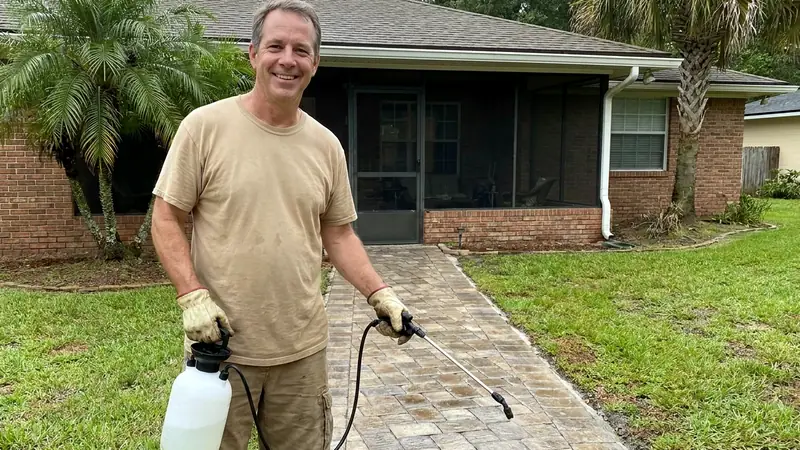
What is the process for paver stain removal, from first look to final walk?
The steps run from identifying the stain to a last check with you. Skipping the test spot is where damage happens. To get on the schedule, call (386) 666-4204.
1. Identify
The contractor asks what caused the stain, how long it has been there and whether sealer is on the pavers.
2. Test
A product goes on one hidden paver or a small spot to see how the surface reacts.
3. Protect
Plants, vehicles, screens and the canal edge are covered or kept clear of runoff.
4. Treat
A degreaser, poultice, rust remover or tannin cleaner is used, matched to the stain.
5. Rinse and dry
The area is rinsed with a wide nozzle at a low angle, then left to dry so any stain left behind shows.
6. Seal or walk
If sealing is planned it follows once the surface is dry. Otherwise the contractor walks the job with you.
What do Palm Coast homeowners ask about paver stains?
Is it good to seal pavers in Florida?
After a stain is out, yes. A coat keeps oil, rust and leaf tannins from soaking in as deeply, so the next spill is easier to wipe off. Sealing does not remove a stain that is already in the paver, and it should go on only after the treatment is done.
How do I remove oil stains from brick pavers?
The stain depth decides the method. A degreaser lifts oil near the surface, and a poultice pulls out oil that has soaked in. PROSOCO says the poultice takes about 5 to 8 hours to dry, and most stains need one pass. A contractor tests a small spot first.
Do I need a license to pressure wash in Florida?
A Levelset answer says a state contractor license is not needed for pressure washing, but a city or county may add its own rules and the local building department has the final word. Ask the contractor how they are set up to work in Palm Coast.
Why is paver sealing so expensive?
Most of the labor is preparation. Stains, weeds and old sealer have to be dealt with before the coat goes on, and sealer over a stain locks it in. The price follows the condition of the pavers more than the cost of the sealer.
How much does it cost to clean and seal block paving?
Block paving is another name for pavers. A Daytona Beach company publishes $1.50 to $3.00 per square foot to clean, sand and seal, so a 400 square foot patio lands near $600 to $1,200. Stain treatment is usually a separate line.
Can rust stains from sprinklers be removed from pavers?
Often, with a rust remover made for masonry. A paver maker warns that rust remover can damage sealer, so the surface may need a new coat afterward. Fixing the sprinkler heads matters too, since UF/IFAS says iron in irrigation water is what leaves orange streaks.
Will pressure washing alone get stains out of my pavers?
Rarely. Water pressure lifts loose dirt, but oil, rust and tannins sit inside the paver. Too much pressure can scar the surface and push the sand out of the joints. A wide nozzle held at an angle is the safer approach, and many stains need a treatment first.
Why do the brown leaf stains keep coming back?
The leaves keep falling. A paver maker says leaf stains return every year, and the lasting fix is to decide whether to live with the tree or remove it. Sealing helps the next stain come off more easily, though it does not stop the staining.
Is the white film on my pavers a stain?
Usually not. It is often efflorescence, which Wikipedia describes as salt moving to the surface of a porous material and forming a coating. It has its own remover and often fades with time, so it is treated differently from oil or rust.
Can a stained paver be replaced instead?
Yes, when a stain will not lift. A paver maker notes that a single concrete paver can be pulled and replaced, which is one advantage over a poured slab. The match needs to be close, so bring a spare paver or the brand name if you have one.
Do stains near a Palm Coast canal or pool need special care?
Plan for where the rinse water goes. A contractor should keep cleaner out of the canal, cover plants and protect the pool. Damp, shaded areas by the water also grow green faster, so a stain and a growth problem may overlap.
What other paver services are available in Palm Coast?
Point out the stain and get a price
Send a short note or call. A contractor near Palm Coast gets back to you within 1 business day, often the same day.
Free, no obligation